
Reviews

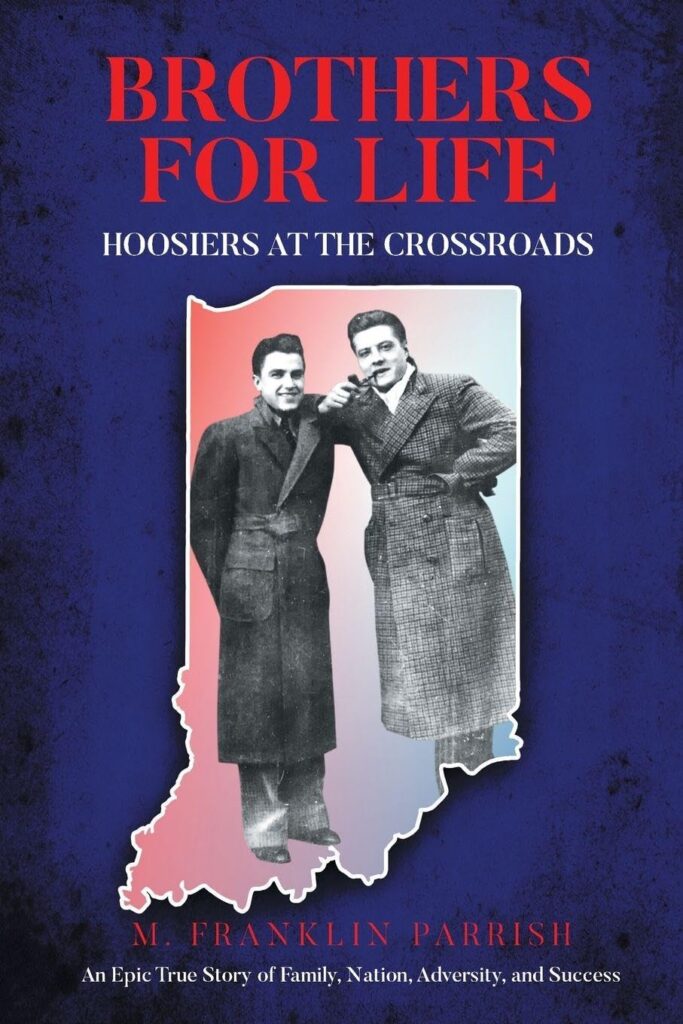
Title: Brothers For Life: Hoosiers at the Crossroads 

Publisher ‏ : ‎ Newman Springs

Publication date ‏ : ‎ February 21, 2025

Language ‏ : ‎ English

Print length ‏ : ‎ 142 pages

ISBN-13 ‏ : ‎ 979-8887639260

Best Sellers Rank: #2,843,325 in Book

Customer Reviews: 

Introduction

The book opens with the idea that family history is never random. The author suggests that the events shaping a family may look ordinary at the time, but later they reveal a deeper meaning. The Parrish family story is not only about two brothers, but about how faith, hardship, and unseen forces shape generations.

Lesson: Our lives are connected to the sacrifices and choices of people who came before us. Nothing meaningful happens in isolation.
Chapter 1: Brothers United and a Nation Divided
This chapter begins with the Civil War and the Parrish brothers who fought for the Union. Joshua Parrish is badly wounded, but his brothers save him from the battlefield. That single act of brotherly love allows future generations of the Parrish family to exist.

Lesson: One brave act can echo through generations. Brotherhood is not just affection; sometimes it is sacrifice, rescue, and survival.

Chapter 2: Age of Innocence
The story moves into Decatur, Indiana, during a simpler time before the full weight of tragedy enters the family. Richard and Myles are introduced as young boys born into a family with ambition, tradition, and hope. But beneath that innocence, the reader can already sense that hardship is approaching. Their father has dreams of becoming a doctor or lawyer, but life is quietly preparing to test the family.

Lesson: Childhood innocence is precious, but it is also fragile. Life can change quickly, even when a family seems secure. Life can change quickly, and the things we take for granted can disappear without warning.

Chapter 3: Innocence Lost
This is where the family’s life changes deeply. Richard and Myles’s father loses his sight after a failed eye surgery. His blindness destroys his business and forces the young boys to grow up faster than children should. They help him sell brooms, shine shoes, and face poverty and humiliation.

Lesson: Pain can either destroy a person or sharpen their purpose. For Richard and Myles, suffering became the foundation of their determination.

Chapter 4: Depression, Desperation, Deliverance
During the Great Depression, the brothers endure poverty but refuse to surrender to it. They start a barbershop, help repair the family home, support their parents, and pursue education. Even when life gives them every reason to quit, they keep moving.

Lesson: This chapter taught me that success is not always built in comfort. Sometimes it is built through cold rooms, long workdays, sacrifice, and refusing to quit.

Chapter 5: Personal Aspirations and World Conflagration
World War II reshapes the brothers’ lives. Richard enters medicine through the Navy, while Myles becomes connected to law, the FBI, and Naval Intelligence. Even while serving away from home, they continue supporting their parents and remain tied to Decatur.

Lesson: True success does not mean forgetting where you came from. Even when the world grows larger, character is revealed by loyalty to family and principle.

Chapter 6: A New Beginning
After the war, both brothers return to Decatur to begin their professional lives. Richard becomes a respected doctor, and Myles begins his legal and political career. The chapter also shows their marriages and the way their lives continue to mirror one another.

Lesson: A new beginning is not always about leaving the past behind. Sometimes it means returning home with the strength to build something better.

Chapter 7: Blossoming Careers and Early Family Life
The brothers grow into their roles as professionals and family men. Dr. Richard Parrish’s medical instincts are shown powerfully when he intervenes during the birth of the author, likely saving his life. The chapter blends family love, professional skill, and the deep trust between brothers.

Lesson: A person’s gift becomes meaningful when it is used to protect life. Richard’s medical talent was not just a career; it was a calling.

Chapter 8: Baptism by Fire, Religious Liberty, and Public Vindication
Judge Myles Parrish faces a defining test when he rules in favor of Jehovah’s Witnesses, an unpopular religious minority, in a zoning dispute. He chooses constitutional principle over public pressure. Later, voters vindicate him by reelecting him overwhelmingly.

Lesson: Integrity means doing what is right before it becomes popular. Real leadership requires courage when public opinion is against you.

Chapter 9: Ethics and Expectations: A Rising Tide Lifts All Ships
This chapter shows the brothers’ values in action. Richard treats the poor and vulnerable without seeking attention. Myles uses his courtroom to practice fairness, especially toward minorities and people society often overlooks.

Lesson: Character is not proven by titles. It is proven by how a person treats those who cannot
repay them.

Chapter 10: Family Activities and Childhood Memories
The author recalls childhood with warmth: church, scouting, family dinners, summers, cousins, and small-town traditions. These memories show the softer side of the Parrish family after so many chapters of struggle.

Lesson: Family legacy is not only made through great public achievements. It is also made through ordinary moments that children remember forever.

Chapter 11: Dark Shadows and Childhood Trauma
This chapter reveals the emotional strain inside the family home. The author describes fear, tension, anxiety, and the difficulty of growing up in a household where people tried to “keep up appearances.” It is honest and painful.

Lesson: Every family has shadows. Healing begins when those shadows are named honestly instead of hidden.

Chapter 12: Career Dreams and Dashed Aspirations
Myles Parrish faces political attacks and professional disappointments, including dreams that do not fully come true. Still, he remains steady and teaches his son to respond to cruelty with kindness. The chapter shows that public life can be harsh, but dignity matters.

Lesson: Not every dream is fulfilled the way we imagine. Still, the way a person handles disappointment can become part of their legacy.

Chapter 13: The Torch Is Passed
The next generation begins to step forward. The author and his cousin Richard pursue higher education, careers, and adulthood while carrying the expectations of their fathers. This chapter shows how legacy moves from one generation to the next.

Lesson: Inheritance is not only money or a family name. It is responsibility, memory, discipline, and the pressure to honor what came before.

Chapter 14: Let’s Go Home—Everything Is Done Here
The book reaches its emotional close with the death of Judge Myles Parrish. The title itself feels final and peaceful, as if his life’s work had reached completion. The chapter reflects on grief, memory, and the end of an era.

Lesson: A meaningful life does not end when a person dies. It continues through the values, stories, and people they leave behind.

The Chapter That Stood Out to Me the Most

The chapter that stood out to me the most was Chapter 8: “Baptism by Fire, Religious
Liberty, and Public Vindication.”

This chapter stayed with me because it showed Judge Myles Parrish at the center of a real moral test. He was not deciding an easy case. He was dealing with an unpopular religious group at a time when public opinion was strongly against them. As a judge, he could have protected himself politically by going along with the crowd. Instead, he chose the law.

What I respected most was that Judge Parrish understood something deeper than popularity. He understood that constitutional rights only mean something when they protect people we may not agree with. That is what made his decision powerful. He did not rule for the Jehovah’s Witnesses because they were popular. He ruled for them because the law required fairness.

As I read that chapter, I saw how his childhood shaped him. He had known poverty, humiliation, religious prejudice, and unfair treatment. Instead of letting those experiences make him bitter, he
allowed them to make him more just. That is the kind of lesson an attorney or judge would understand immediately: the law is at its best when it protects the unpopular person from the power of the majority.
To me, this chapter showed the highest meaning of public service. Judge Parrish did not just hold office. He honored the office.

Final Thoughts and Impact to the Readers

After reading Brothers for Life, I understand that this book is much more than a family story. It is a lesson in character, sacrifice, faith, and the lasting power of brotherhood. Dr. Richard K. Parrish and Judge Myles F. Parrish were not men who were shaped by comfort. They were shaped by hardship, responsibility, poverty, war, family duty, and personal loss. Yet instead of allowing those struggles to defeat them, they used them to become men of service, discipline,
and purpose.

The life lessons shown by these two gallant men — brotherly love, self-reliance, zealous determination, and an abiding faith in God — are timeless and unwavering. These virtues are not limited to one family, one town, or one generation. They are lessons that every reader can carry into his or her own life. If these values are learned and remembered by those who read this brief anthology, then the author’s purpose has truly been fulfilled. What impacted me most is that Richard and Myles Parrish did not simply talk about values; they lived them. As boys, they helped guide their blind father through town. As young men, they worked their way through school. As professionals, one healed the sick and protected sight,
while the other defended fairness, justice, and constitutional rights. Their lives prove that greatness is not always loud or glamorous. Sometimes greatness is found in duty, loyalty, hard work, and quiet courage.

This book leaves readers with a clear reminder: we do not control every hardship that comes into our lives, but we do control what kind of people we become because of it. The Parrish brothers turned suffering into strength and responsibility into service. Their story encourages readers to examine their own lives and ask whether they are living with the same courage, faith, and
commitment to others.

My final understanding is that Brothers for Life is a tribute to two men, but it is also an invitation to the reader. It invites us to remember our families, honor our past, remain faithful during difficulty, and live in a way that leaves something meaningful behind. The legacy of Richard and Myles Parrish continues because their virtues still speak to anyone willing to listen.